

Practical Human Intelligence
"If your organization wanted to replace you with someone far better at your job than you, what would they look for? I think it’s unlikely that they’d seek out someone willing to work more hours, or someone with more industry experience, or someone who could score better on a standardized test. No, the competitive advantage the marketplace demands is someone more human, connected, and mature. Someone with passion and energy, capable of seeing things as they are and negotiating multiple priorities as she makes useful decisions without angst. Flexible in the face of change, resilient in the face of confusion. All of these attributes are choices, not talents, and all of them are available to you."
This quote is from Seth Godin’s Linchpin: Are You Indispensable?, published in 2010. How true this idea is, even with all of the changes that have happened since.
Human-Like Behaviour ≠ Human-Like Intelligence
Organizations and researchers consistently identify sound judgement and interpersonal savvy as essential capabilities in the age of AI (examples: Harvard, MIT, WSJ). Practical Human Intelligence is a set of trainable skills that allow you to operate with clarity, influence, and resilience even in tough circumstances.
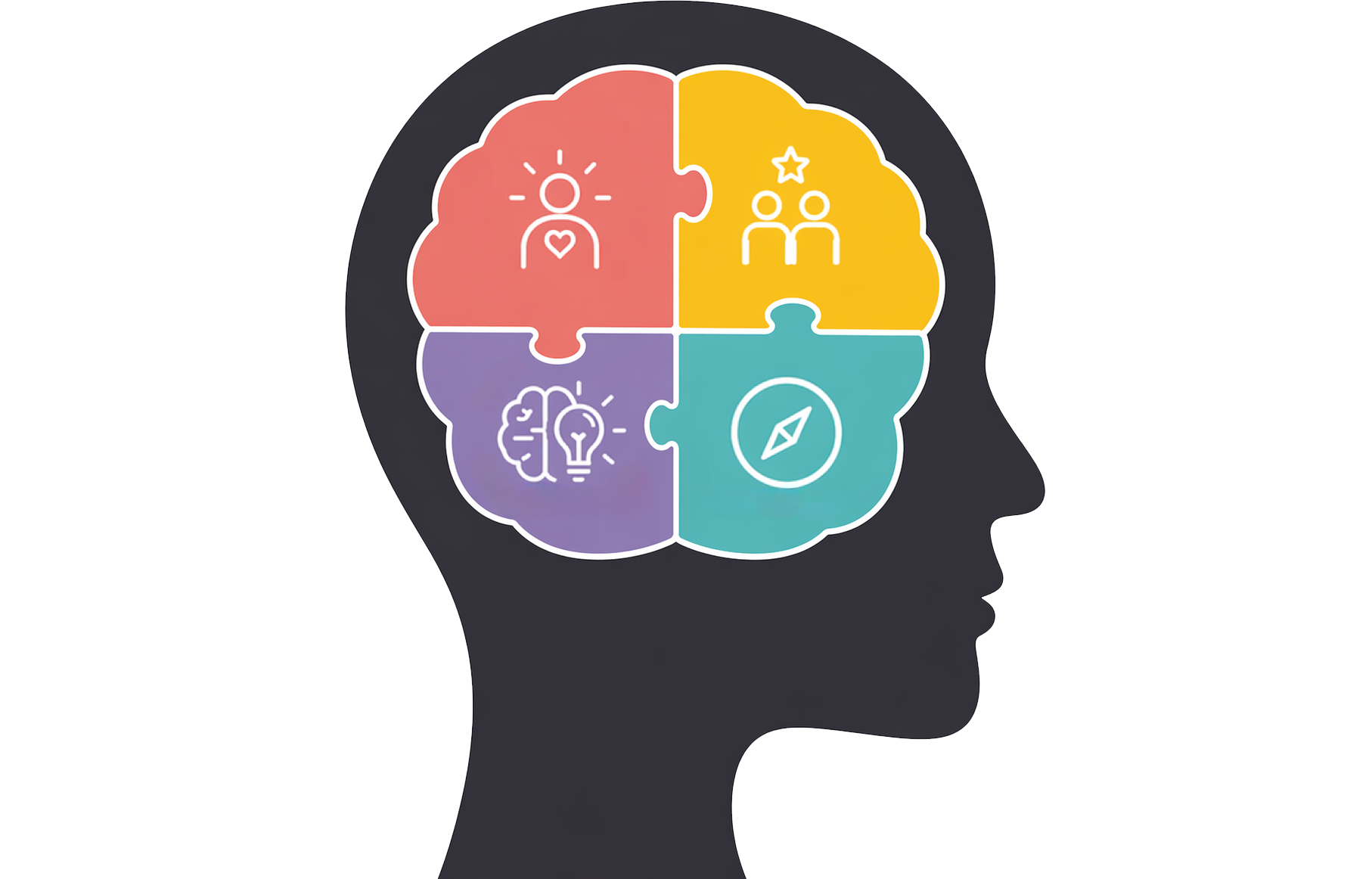
In a volatile and constantly changing world, your competitive edge is no longer what you know. It’s more about how powerfully human you can be. Practical Human Intelligence is the operating system I use to help leaders build a competitive advantage. The framework is built around four quadrants, each representing a different way you shape the world around you. When you strengthen these abilities, you reduce struggle, increase strategic impact, and lead with the strength that others depend on.
PERSONAL MASTERY – How you shape yourself:
Deep self-awareness, clear thinking, emotional discipline, and action orientation. These are foundations of effectiveness. Personal mastery is also about mental skills (like those used by Olympic champions), the ability to let go of limiting beliefs, and taking advantage of how you’re wired.
POWER & INFLUENCE — How you shape relationships:
Values-aligned interpersonal effectiveness that is about charisma, personal brand, effective networking, the ability to lead difficult conversations, and political savvy. This quadrant focuses on combining power, influence, and human connection principles for building durable relationships and leading others – even when you don’t have formal authority.
SKILLFUL JUDGEMENT — How you discern and decide:
Creativity, intellect, intuition, and integrated wisdom. In a world of noise and algorithmic answers, the indispensable leader is one who can exercise reliable judgement. This means knowing the difference between vague gut feelings and true pattern recognition, choosing the best mental model(s) for any given problem, and accepting accountability for well-calculated decisions. The judgement quadrant is about the ability to see clearly, connect insights, create, and choose well – even under pressure.
ADAPTABILITY — How you respond to uncertainty:
Readiness, mindsets, positioning, the ability to benefit from disruption, and knowing how relationships can enhance options …these are some of the capabilities of adaptability. They are built through deliberate and disciplined practice. It’s how you stay effective when the conditions shift, when information is incomplete, and when the path forward is not obvious.


“Okay, this is it. This is the one. You get to be the lead, and you get to take on a character that’s going to use every aspect of your talent … your instrument. It’s going to challenge you in ways you’ve never been challenged before.”
- Director Christopher Nolan offering the lead role in the film Oppenheimer to eventual Best Actor Oscar Winner Cillian Murphy
This statement resonates with me because it strikes me as an inspirational call to action, to:
Bring to life all of our under-developed abilities, and
Rise to the occasion, whatever that means for each of us
Does it speak to you as well?
Photo: Universal Pictures